


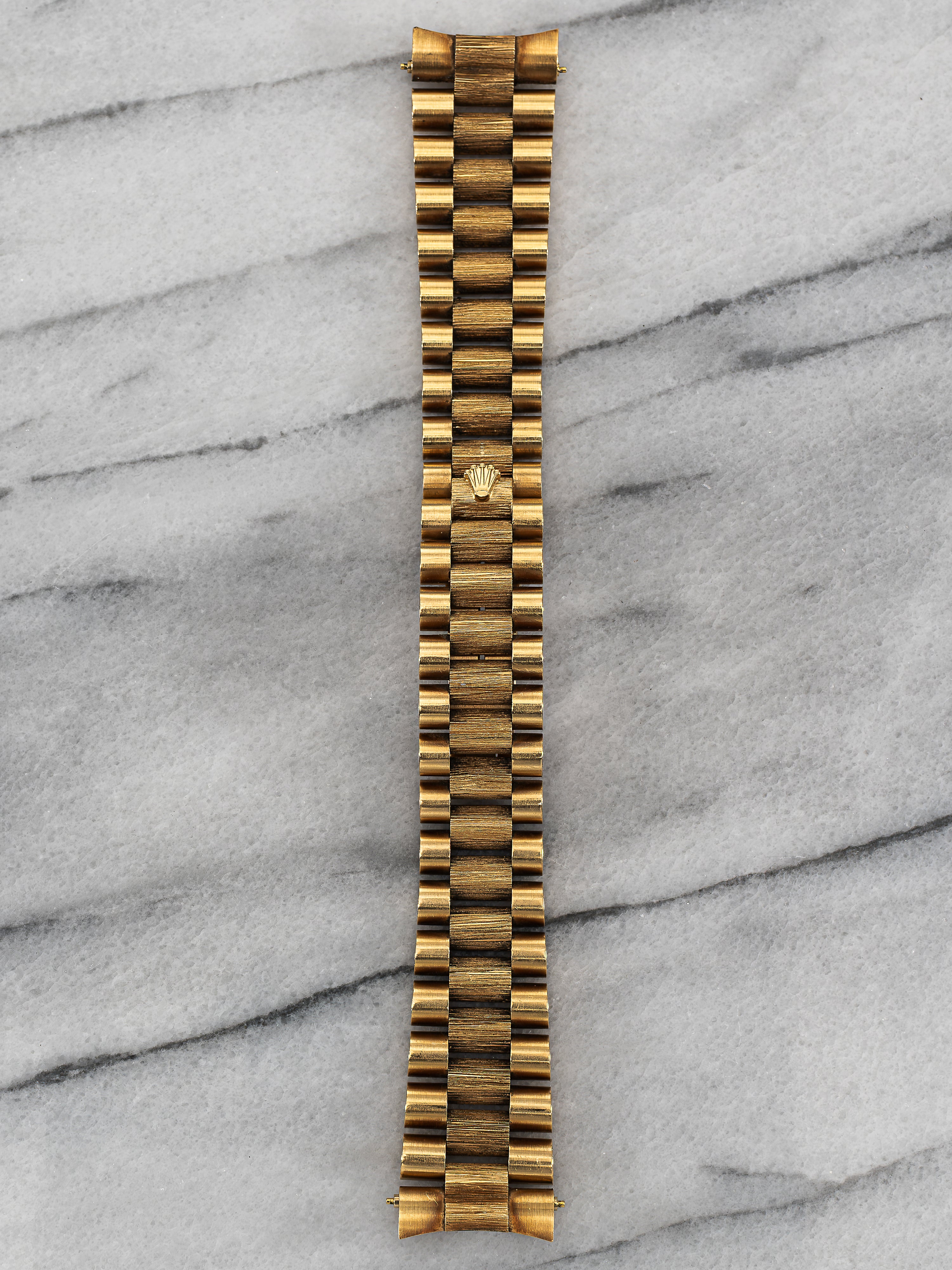
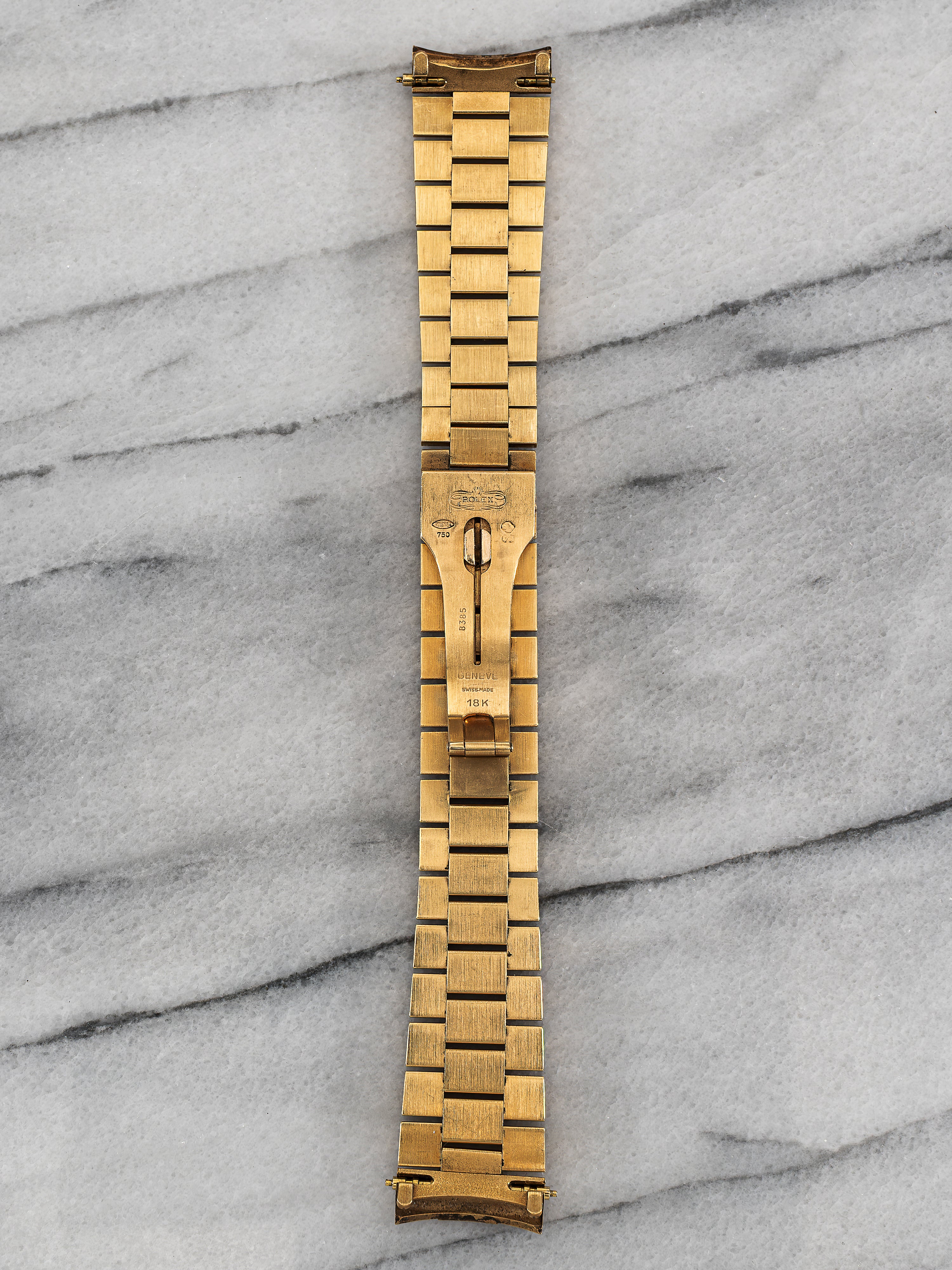
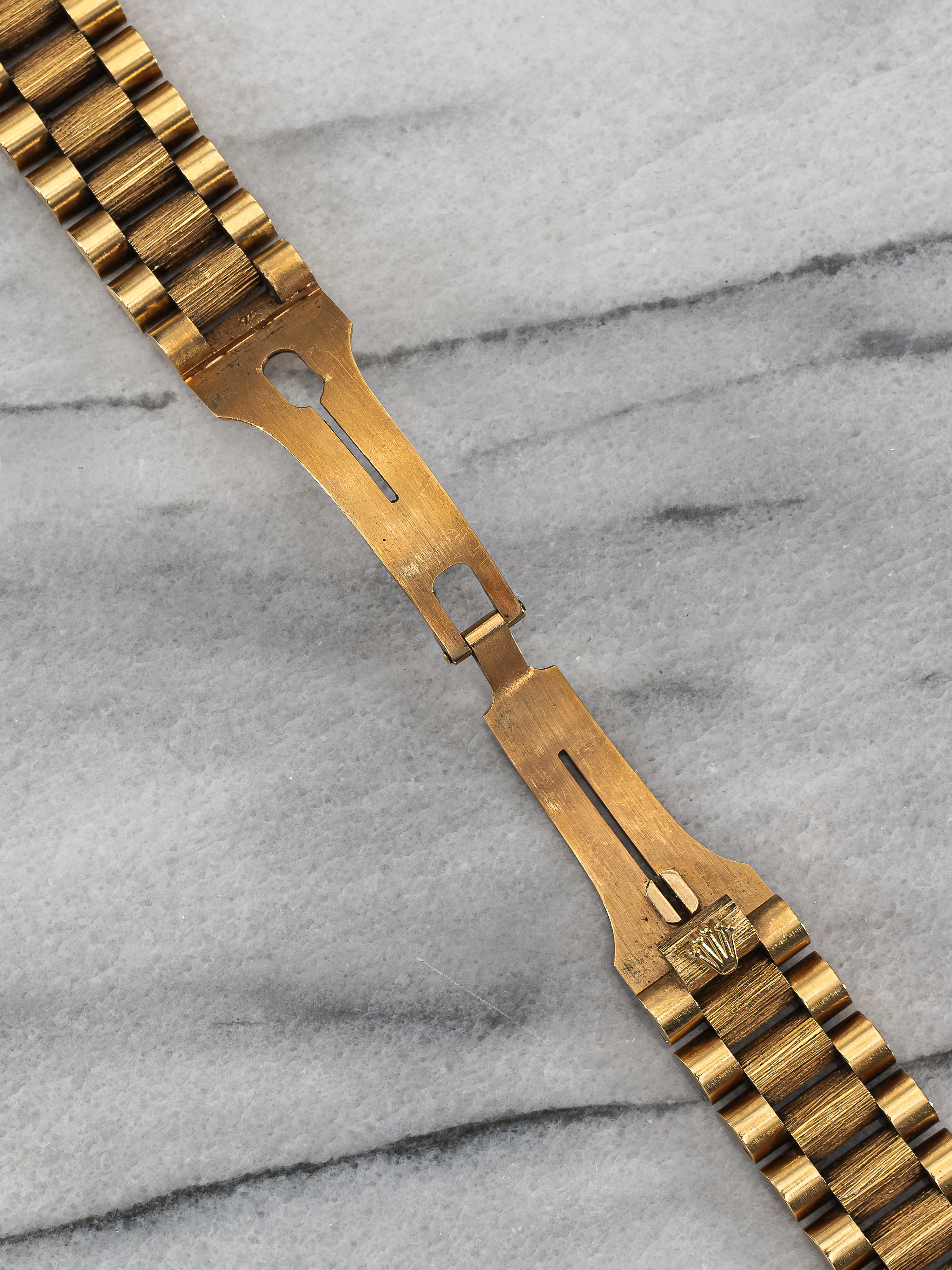
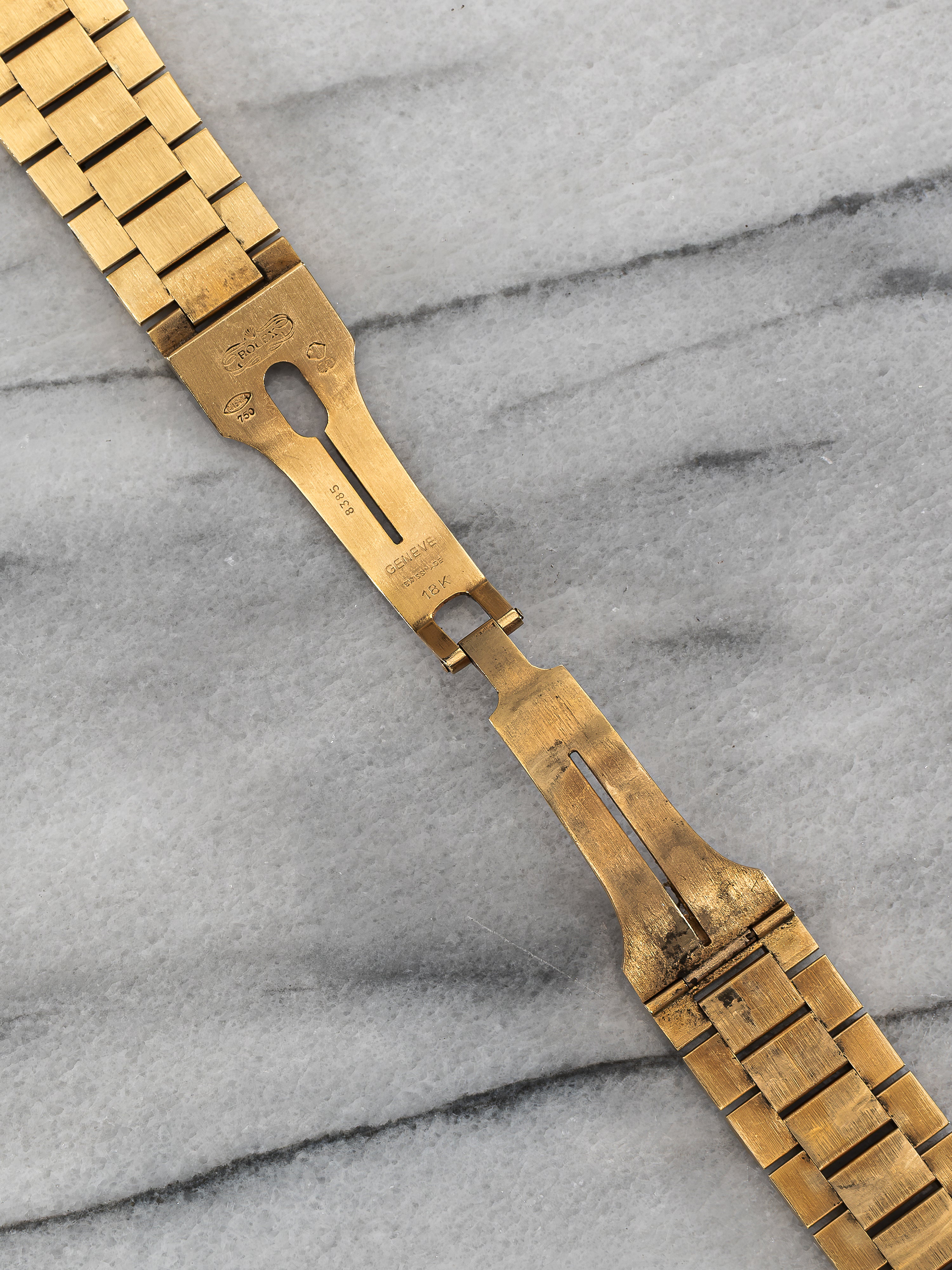
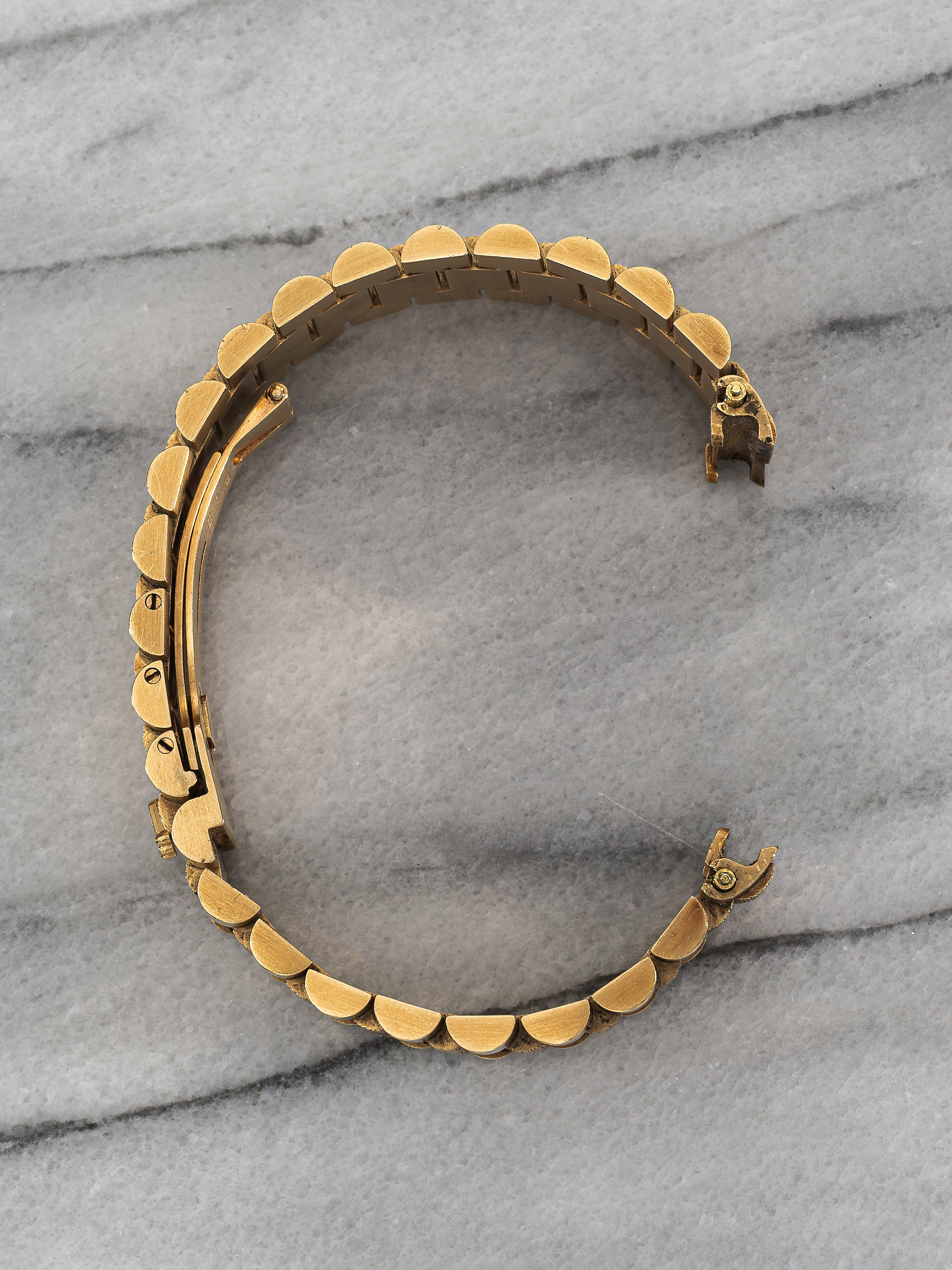
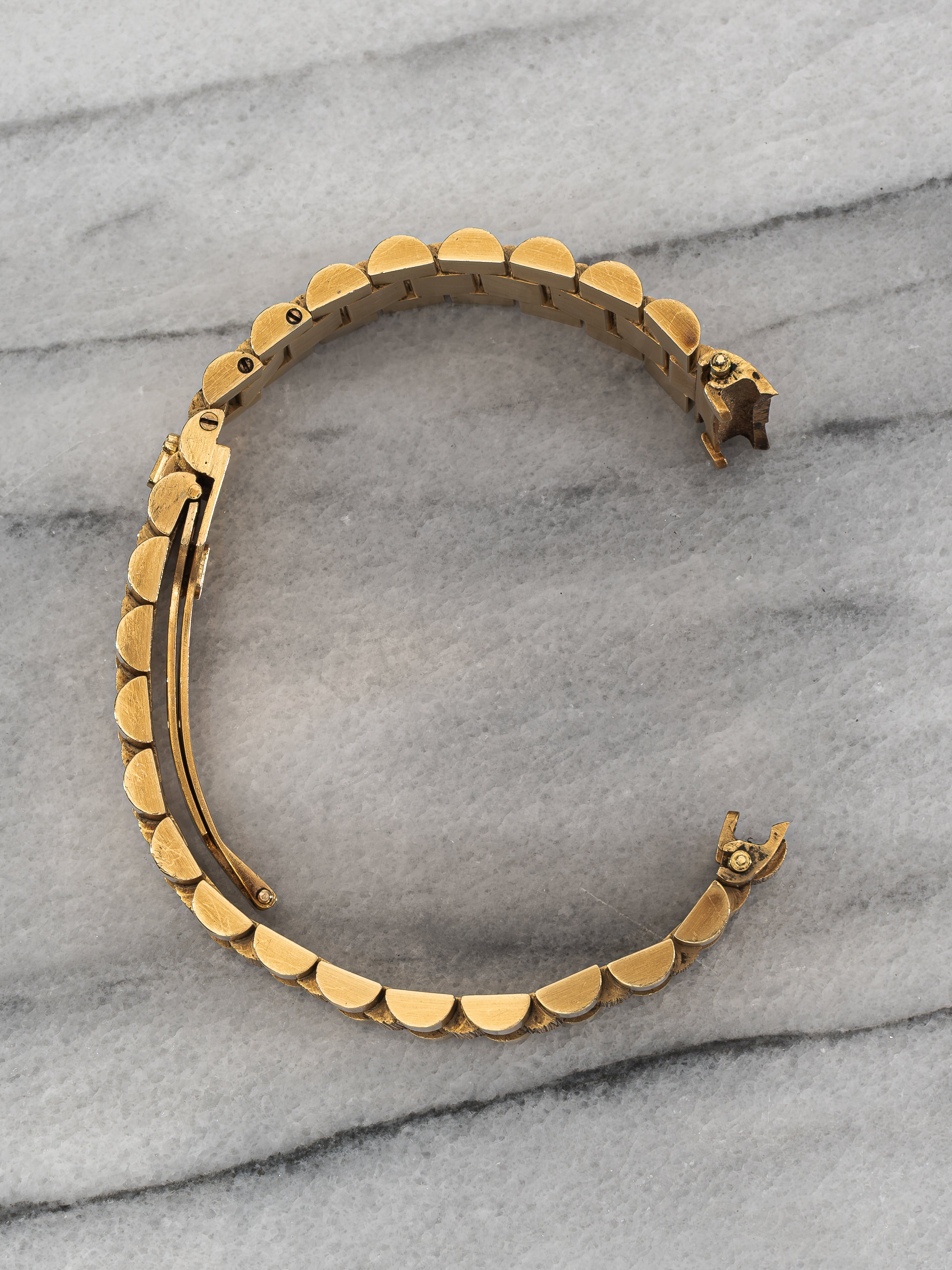
Rolex Day Date 18078 – Bark Finish Bracelet
Here's a vintage Rolex Day-Date bracelet for references 1807, 18078, and double quick from the 1970s-1990s. 18K yellow gold. 20mm lug width. Bracelet fits up toa 7 inch wrist (18cm). It's in great shape, no stretch at all. It doesn't have much wear. The bracelet slightly oxidized (got a darker color due to age).
Ready to wear!
At Danny's Vintage Watches, we rigorously authenticate and inspect every watch to guarantee both its authenticity and exceptional quality. Your complete satisfaction is our utmost priority. We are dedicated to guiding you to the ideal timepiece that meets your desires. Should you have any inquiries, our team is ready to provide swift and comprehensive assistance.
Our Guarantee:
- Each timepiece is thoroughly evaluated, authenticated, and approved by our expert team before it is offered for sale.
- We guarantee the period-correctness of all components unless otherwise stated.
- The authenticity of each watch is guaranteed in perpetuity.
To get in contact directly with the team send us a text for the quickest response! 917-887-1584
If you are interested in trading or selling your watch please click here, and fill the form
Payments
We are committed to providing a secure and seamless payment experience. Our site features a built-in payment processor that accepts most major credit cards (Visa, MasterCard, American Express). U.S. residents also have the option to pay via Zelle. If you prefer to pay via bank wire, which will be slightly cheaper, please send a text to 917-887-1584 so we can reserve the item you wish to purchase.
Shipping
We ship via FedEx, USPS, UPS, and DHL, depending on the item's value and your location. All domestic shipments are fully insured.
Choose options
The collector experience
Trusted by thousands of collectors across the nation, read what they have to say.
Andrew Brill
 US
US
cannot recommend Danny’s Vintage Watches highly enough. I recently went through the process of selling my father’s Rolex, and the team made what could have been a stressful experience incredibly smooth and fair. I ended up trading for three absolute icons: two Cartier Tanks and a vintage Omega Speedmaster. The attention to detail on these pieces was impressive the Speedmaster was in beautiful condition, and the Cartier had been expertly re-plated and polished, looking practically new. What really sets Danny’s apart, though, is the after-care. When I unfortunately busted the crystal on one of the Cartier's eight months later, they sorted the repair quickly and for a very reasonable price. They even went the extra mile by referring me to a trusted jeweler for a ring resizing, where I’m certain their relationship helped me get a better deal. Their shop is filled with incredible finds. If you are a serious enthusiast or just looking for a fair, honest dealer, this is the place. I’ll definitely be back for my next "grail" watch!
Joel Brodfuehrer
Wonderful experience. Danny gave me personalized recommendations and service when purchasing vintage watches. He was patient with me and very understanding, taking into consideration my requests. I will absolutely be buying more watches from Danny! Thanks for a great transaction.
Y
 JP
•30 October 2025
JP
•30 October 2025The watch arrived safely and exactly as described. It's a beautiful piece, in excellent condition, and clearly well cared for. Communication was clear and courteous throughout, and the shipping was prompt and secure. I'm very pleased with this purchase and would happily buy from this seller again. Thank you very much!
Carl F.
US
•28 October 2025Excellent inventory and high quality communication. I found a rare vintage Rolex I had been seeking for a while and found Danny's a pleasure to do business with.
Erik Goldfarb
US
Nothing but great things to say about my experience at Danny’s Vintage. Danny and David are experts and truly find joy in finding unique vintage watches. They’re knowledgeable about this history of the watches and will help you find the right piece for you. Overall, a great experience and I’ll be back.
Aria pidge
US
Absolutely unreal experience. Found them from Facebook. Figured I’d browse the site. Fell in love with a patek, texted them, and they (specifically David) were so amazing and easy to chat with about options and inventory, process etc. Came in to pick up the watch - man, as you probably know - you cannot understate how great their selection is. That’s really one of the best parts as well. The service is great; they treat their clients great, prices are very good - but the curation is another huge stand out part. Anyway - these fellas were so great when we came in, that my wife was determined that we buy a watch for her, - you know just to help the business. Not for her, she insists, but because of how great the guys at the shop were. And I agreed so I obliged. :P It’s honestly a 10/10 shop. As we speak they are reworking both our watches to fit our bracelet and I’ll add photos when I pick up the watches. Heck, 11/10. They’re that good. Go there, you will not regret it! But it might be very hard not to leave with something
Jacob V.
US
•24 August 2025The vintage Rolex I purchased is a high quality watch. The customer service was superb. I highly recommend the seller.
Filipp Kirik
US
Danny and David are the best in the vintage watch business. They care about their client, They are passionate about the quality of watches that they sell. I’m so happy that I got my watch from them and I will never go anywhere else again.
Joseph H.
 CA
•27 May 2025
CA
•27 May 20255 Stars. Buy the dealer not the watch. Have complete faith in Danny's VW. They care about reputation and service. You can't go wrong with them. Highly recommend.
Olivia Garbin
US
If I could give more than 5 stars I would. They were so kind and actually cared what I bought as a present. We've already purchased from them again and will do more in the future. Incredible selection of pristine watches